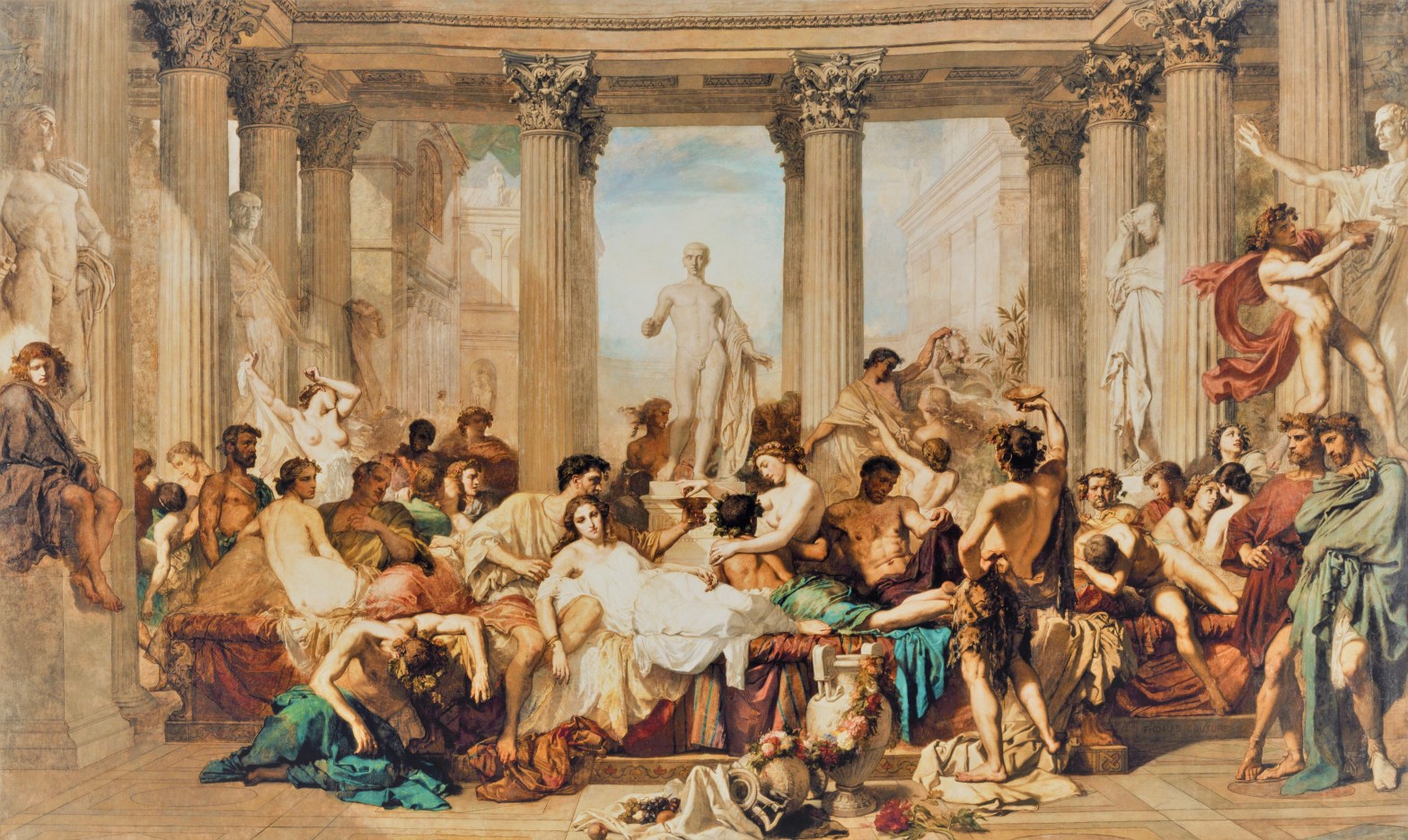

While I’m not a massive fan of Roman history I really do lament how staid Christmas can be, culturally. On the one side, there is still pressure for it to be a Christian time, even though there have been so many kinds of celebrations at this time of year including Yule. On the other is the vacuous present giving and sitting in front of the T.V.
For years now in my family we have forgone the common focus on present giving to on the festivities: good family, food, drink, singing around a piano, greenery all over the house. Going carol singing is lovely but restrained. I love carols. We sometimes join pagan Solstice celebrations at stone circles. We watch mummers play on boxing day. In January we go wassailing. But I would love it if we expanded this out into the street and the town. We do this culturally as the ‘works’ Christmas party, but somehow it, as well as the family get-togethers lack a focal point; a ritual observance and reason to be merry. Pagan Winter Solstice or Yule, for me, is the focal point but I would love to make it the reason for the whole Christmas season, a whole week of revels for thanks for what we have, and a return of the Sun. The Romans did it in style.
A day of celebration for their god of agriculture, Saturnalia turned into a week’s holiday from 17th of December, over the Winter Solstice, and until Dies Natalis Sol Invictus on the 25th.
Normal life was overturned: business, educational institutions, and law courts were closed. Masters served slaves and slaves ruled where they served. Slaves were also free to gamble, give orders, mock their masters, and wear the cap of liberty called a pileus. Gambling with dice was allowed, festivities took place, gifts of wax candles and clay figures were exchanged. The gifts were intentionally low value, some even joke gifts, and accompanied by comic verse (Christmas crackers, anyone?). It was noisy, drunken, and glutinous. There was singing and dancing, role-playing, and mask-wearing. People wore colorful evening attire called synthesis during the day.
The English custom of having a Lord of Misrule may have come from the Roman practice of having a mock king called Saturnalicius princeps, or “leader of Saturnalia.” This Mock King was sometimes chosen from a household by having a cake that contained a coin or almond; whoever got the hidden item became the King for a day.
All was a mockery of social norms and rules. Overturning of the natural order: hence Saturn is unbound and chaotic. In the Temple to Saturn the statue which would normally be bound at the feet with wool was untied, and a pig sacrificed to him at the Northwest altar – I give all these details because these all tie in with Astrological symbolism for Saturn, whereas the festivities are the opposite!
Efforts to get more converts to Christianity may have been the reason that Christ’s birthday was declared to be on the 25th of December. This is the date of Dies Natalis Sol Invictus, the birth of the unconquered Sun. Our Christmas celebrations have much in common with Saturnalia, and it is little wonder Christianity bemoans the lack of faith; given the freedom and opportunity, people tend back towards our pagan roots.
This Capricorn season, Saturnalia, Yule, Solstice, and Christmas I hope you enjoy the rising of the Sun, gag-gifts with bad jokes attached, too much food and drink, board games, carols, work discos, pigs-in-blankets, bright silly jumpers no one would dare wear the rest of the year and the kids being in charge… Oh, Saturnalia!
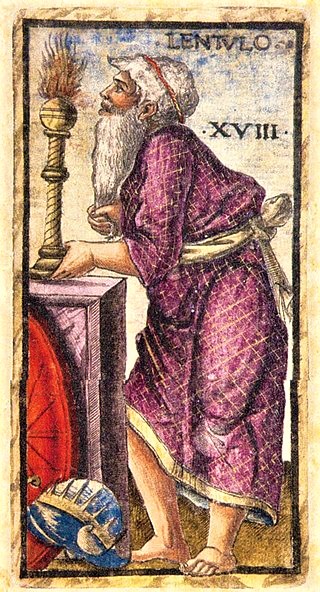
The Sola Busca Tarot
Lentulo, card 18 shows a man placing a large liturgical candle on an altar. He is wearing the pileus cap that came to be associated specifically with Saturnalia and coloured synthesis robes worn. The red cord around his pileus distinguishes him as one of the flamines, the Roman priests who served official cults. His belt resembles a serpent, a chthonic symbol of Chronos.
(For more information about the symbolism in Sola Busca deck see Peter Mark Adam’s The Game of Saturn; Decoding the Sola Busca Tarocchi. An excellent book)
 Astrology Imaginarium